

Small Backyard Design: Getting the Scale Right
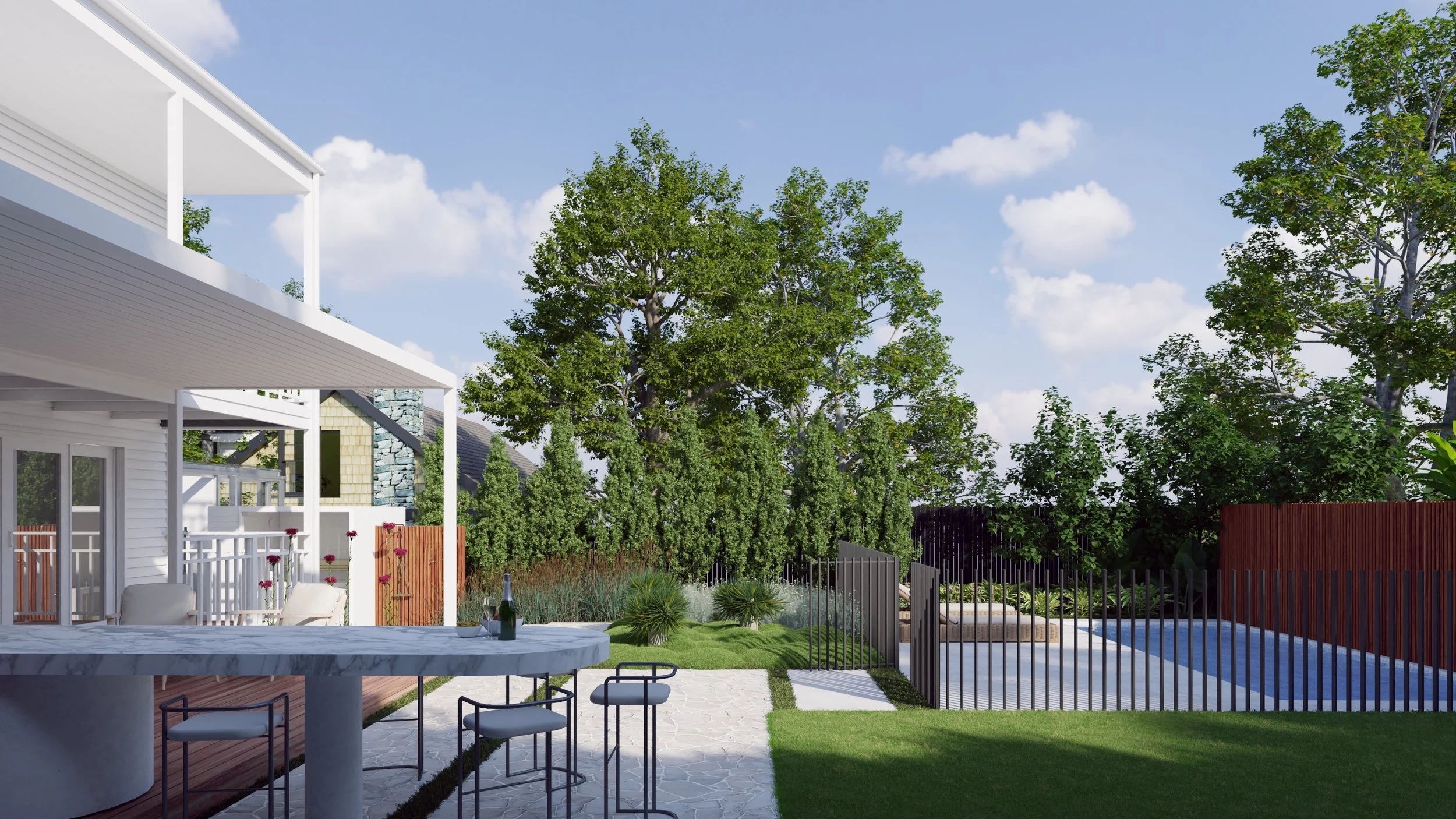
A smaller backyard does not always mean a smaller brief.
Most clients still want the same things they would want in a larger space. A pool, somewhere to eat outside, shade, privacy, lighting, planting and a garden that feels good to spend time in.
Sometimes there is more to fit in as well. A sauna, outdoor shower, lawn, storage, kids’ space or a covered entertaining area.
None of that is unreasonable.
The challenge is making those elements feel like they belong together.
On paper, it is often possible to fit a lot into a residential block. But there is a big difference between making everything fit and creating a space that feels balanced, usable and resolved.
That is where scale matters.
Not just size. Scale.
Scale is the relationship between everything in the garden. The pool and the lawn. The dining area and the house. The covered area and the planting. The hard surfaces and the softer edges. The built elements and the open space around them.
When those relationships are right, a compact backyard can still feel generous.
When they are wrong, the space can feel crowded before it is even built.
Small spaces need better decisions
One of the easiest mistakes to make in a smaller backyard is trying to make every element as large as possible.
The biggest pool that will fit.
The biggest deck.
The biggest covered area.
The biggest dining setting.
As many features as the space will allow.
At first, that can feel like value. More space used. More features included. More boxes ticked.
But in a compact garden, every oversized decision takes something away from something else.
A larger pool might reduce the planting.
A bigger paved area might make the garden feel hard.
A covered structure that is too deep might darken the house.
A dining area that is squeezed in might never feel comfortable to use.
Good small backyard design is usually not about adding more. It is about knowing what matters most, then giving those parts enough room to work properly.
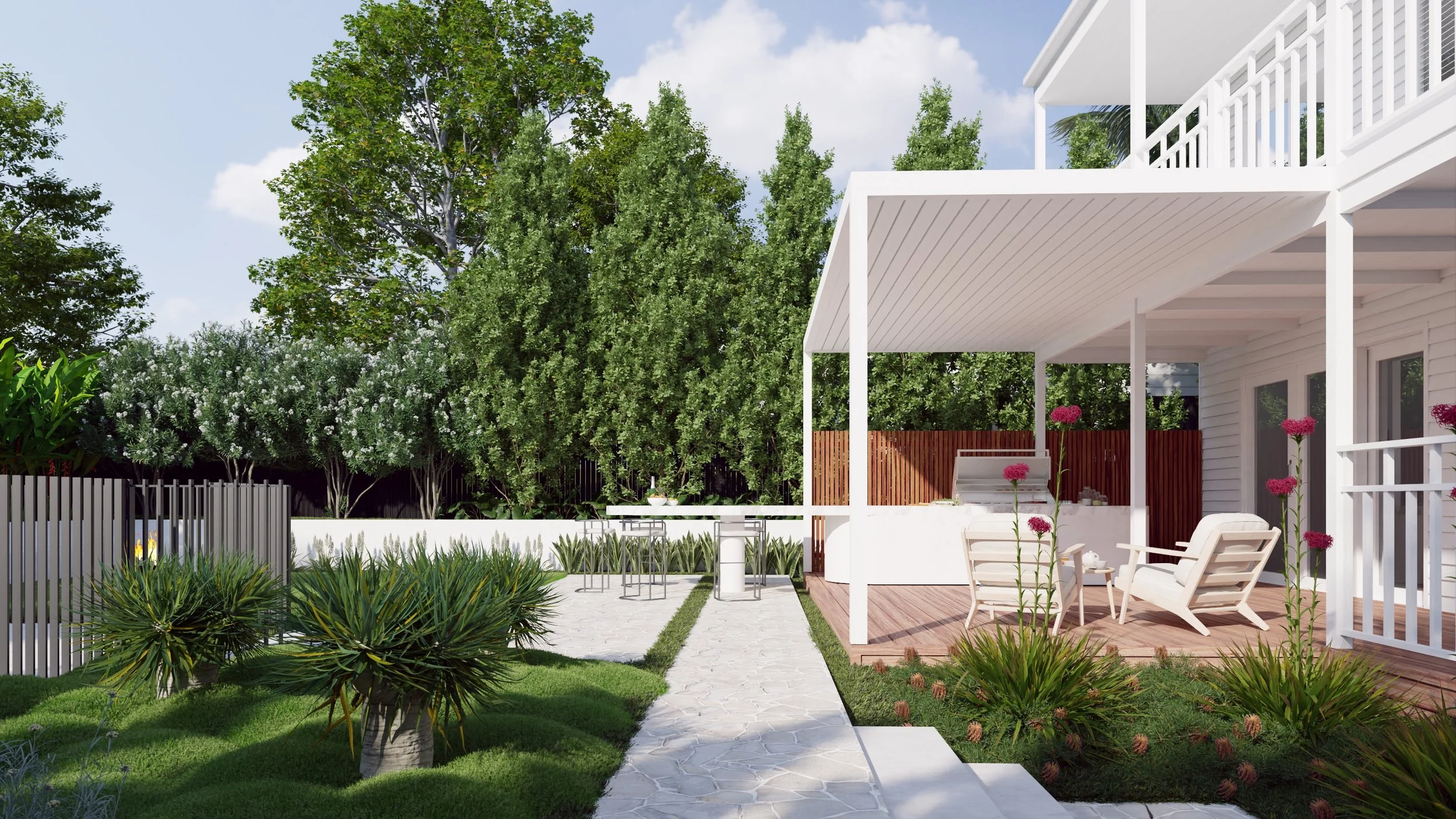
The brief needs to become more than a list
A list of features is a good starting point, but it is not the full brief.
Pool.
Dining.
Sauna.
Covered area.
Lighting.
Planting.
That tells us what the client wants included, but it does not tell us how the space should feel or how it needs to work day to day.
Before a design can be resolved properly, we need to understand how the garden will actually be used.
How often will the clients eat outside?
How many people usually gather there?
Is the pool mainly for kids, relaxing, cooling off or entertaining?
Does the sauna need to feel private, or connected to the rest of the garden?
Where does the afternoon sun hit?
Where do neighbours overlook the space?
What needs to feel open?
What needs to feel more protected?
These questions matter because they stop the backyard becoming a collection of features.
The best outcomes usually come when the design is shaped around how the space will be lived in, not just what can be drawn on a plan.
The pool should not become the whole backyard
In a smaller residential block, the pool is usually one of the biggest decisions.
It has visual weight. It affects the paving, fencing, planting, levels, access and how the rest of the garden works around it.
A pool does not need to be huge to feel good.
In many cases, a slightly smaller pool with better proportions, stronger planting and a more comfortable entertaining area will feel better than a larger pool that dominates the backyard.
The question is not always, how big can the pool be?
A better question is, what size pool allows the whole garden to still work?
That small shift can change the entire design.
It protects the backyard from becoming a pool with leftover space around it.

Outdoor dining needs more room than you think
Dining areas are often under-scaled in outdoor spaces.
A table might fit on a plan, but real life needs more room than the table itself.
Chairs need to pull out. People need to walk around. Food needs to be carried outside. Doors need to open. Guests stand, sit, turn and gather.
That usable space around the furniture is what makes the area feel comfortable.
If the dining area is too tight, it may look fine in a drawing, but it will not feel easy to use once the garden is built.
In a smaller backyard, every zone needs enough space to actually do its job.
Covered areas should feel useful, not heavy
A covered outdoor area can make a backyard much more usable.
It gives shade, shelter and a stronger connection between the house and garden.
But in a compact space, it needs to be handled carefully.
If the structure is too heavy, too low or too deep, it can make the backyard feel smaller. It can reduce natural light to the house and make the garden feel more enclosed than intended.
The aim is protection without heaviness.
Sometimes that means adjusting the size of the cover. Sometimes it means changing the roof form, lifting the ceiling height, simplifying the posts, or allowing more planting around the structure.
The best covered area is not always the largest one.
It is the one that gives comfort while still allowing the garden to breathe.
Planting should not be left until the end
Planting is often the first thing to get squeezed in a smaller backyard.
The pool is drawn. The paving is set. The walls go in. The structures are allowed for. Then planting is fitted into whatever space is left around the edges.
That usually leads to a space that feels harder than it needs to.
Planting is not just decoration.
It softens built elements. It gives privacy. It creates depth. It breaks up paving. It brings movement and texture. It helps a new space feel more settled.
For planting to do that properly, it needs enough room.
Not every garden bed needs to be deep, but most compact gardens benefit from at least one or two stronger planting zones. Those areas give the garden atmosphere and stop the built elements from feeling too dominant.
In a smaller backyard, planting is not less important.
It is often what makes the whole space work.

A simple scale check
Before committing to a design for a smaller backyard, these are the questions worth asking.
Is the pool the right size, or just the biggest size?
Can the dining area actually be used comfortably?
Is there enough room for planting to soften the space properly?
Does the covered area make the garden better, or does it make the house and yard feel smaller?
What is being reduced or removed so the important parts have enough room?
That last question is often the one that brings the most clarity.
Every feature has a cost. Not just a financial cost, but a space cost.
A larger pool may cost planting.
A bigger dining area may cost lawn.
A sauna may cost openness.
More paving may cost softness.
Good design is often about knowing what to reduce, simplify or leave out so the whole garden feels better.
The better question to ask
Most people start with one question.
How much can we fit in?
A better question is this.
What needs to feel good every day?
That changes the way the garden is designed.
It shifts the focus from adding features to creating a space that actually works for the people living there.
For every part of the brief, it helps to ask:
Does this make the space better to use?
Does it have enough room to work properly?
What does it take space away from?
Does it make the garden feel calmer or busier?
Would we still choose this if something else had to be reduced?
That is usually where a better design starts to appear.

The takeaway
The best smaller backyards are not always the ones with the most features.
They are the ones where each feature has been given the right amount of space, proportion and restraint.
Before asking how much can fit, it is worth asking what deserves the space.
That question usually leads to a better garden.
A compact backyard can still include the pool, the dining area, the cover, the lighting, the planting and the special details.
But every part needs to earn its place.
When the scale is right, smaller gardens can become some of the most enjoyable spaces to live in
Planning a smaller backyard?
If you are planning a pool, outdoor living area or full backyard project, it is worth getting the scale right before the design gets too far down one path.
The early decisions often shape how calm, usable and resolved the finished space feels.
